
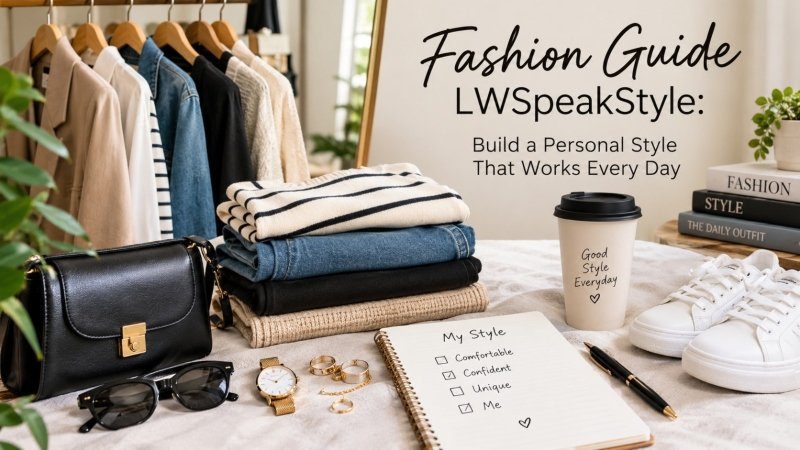
Most of us have a lot of clothes and still can’t find something to wear in the morning. Right? It happens not because of the lack of clothes but because of a wrong choice of pieces that do not go well together or do not suit our lifestyle.
This guide to LWSpeakStyle will help you forget about buying clothes at any price and following all the fashion trends on social media. It will tell you what to do and what not to do to look stylish wearing the clothes you already have.
What Does Fashion Guide LWSpeakStyle Mean?
It is a highly practical approach to building a personality, considering only the things you like and those you dislike and spend a lot of time doing. The two first factors are connected with your work and the place where you stay the greatest part of your day.
For example, if you have a corporate job, the best choice would be tailored trousers, a nice shirt, and a couple of jackets or a vest that can be worn at the office. If you have the privilege to work at home, then your everyday look should include something comfortable that can be worn all day long, such as pants, a T-shirt, and an open jacket. These two people have dressing styles that can be called successful, as the clothes fit them perfectly and look comfortable.
In my opinion, there are only three criteria that can help you select the outfit that will present you well. The first one is comfort, as tight clothes that you need to adjust every other minute will make you look clumsy. Second, it should be something you can wear in several occasions as it will save you a fortune. And the last criterion is your personality, as your style should suit your personality, not the other way around.
Finally, we all change with time, and our dressing style should be altered as well. What I like to wear at 22 is nothing like I want to put on at 35.
Work Out What You Already Like
Before shopping, take a look in your closet. Does something seem to tie them together? Perhaps you always wear dark colors, or you only wear baggy t-shirts, or you have a pair of straight jeans that you never part with. Whatever it is, it’s probably an indicator of your personal style, more accurate than any Pinterest board.
If you want a label for it, here are the usual ones:
| Style | Looks like |
| Minimalist | Plain colors, clean lines, white tee with straight jeans |
| Classic | Button-down shirt, tailored trousers, loafers |
| Casual | Knit tops, comfy jeans, a light jacket |
| Creative | Prints, bold colors, one statement bag |
| Sporty | Joggers, a fitted tee, clean sneakers |
Don’t treat these like boxes you have to stay in. Plenty of people are half classic, half casual and do just fine.
Build Around the Basics
Here’s a mistake I see a lot: buying a gorgeous top that only goes with one skirt. It looks great in the shop and then lives in the wardrobe forever.
Start by taking everything out and making two piles: the stuff you wear and the stuff you don’t. Then ask about each item: does it fit, does it go with at least two other things, and does it suit my life now? Old doesn’t mean bad. Keep what passes. If something needs a repair or a hem, set it aside and deal with it this week, not “someday.”
For most people, the useful basics are a good pair of jeans, a few plain tops, a button-down shirt, some comfortable trousers or a skirt, a light jacket or cardigan, and shoes you can really walk in. Add one outfit for dressier occasions, and you’re mostly covered. You don’t need every item on that list, so go with what matches your days.
Before buying anything new, try the three-outfit test. If you can’t think of three outfits using clothes you already own, leave it on the rack.
Colors and Textures Without the Stress
It is not necessary to use the color wheel when picking an outfit. Instead, stick to two or three colors that look good together. Neutral colors such as black, white, grey, navy, and beige are a good foundation since you can pair them with most other colors. You want to add one pop of color in an accessory or shoes.
Navy and white, black and beige, denim and cream, and olive and brown are some good color combinations to try. These are just some suggestions, so feel free to experiment and find your own combinations.
Clothes with texture add visual interest to an outfit. To add texture, try wearing a chunky knit sweater or denim jacket in otherwise simple clothing. As a rule of thumb, I only wear one piece in a textured fabric. If you are wearing something with a busy print, make sure the rest of your outfit is simple and neutral.
Fit Beats Trends
A fancy jacket that fits wrong on your shoulders will always be wrong. A cheap one that fits you right looks expensive.
When getting dressed, there is a standard checklist to run through to make sure everything fits right. Jacket seams should hit at the very edge of your shoulders, or be oversized on purpose. You should be able to raise your arms freely. Waistbands should not dig in or constantly need adjusting. Hem lengths should be tested in the shoes you will be wearing. Then, sit down, walk around the store, and bend down. Anything that feels uncomfortable to try on, is going to feel much worse by lunch.
Oversized clothes can appear very intentional, and fitted clothes will stick to your figure better. Neither is wrong. Choose whatever fit you prefer, so long as it complements the piece.
Dressing for Real Life
Casual days. Straight jeans, a plain tee, clean sneakers, maybe a light overshirt. Add a belt or small bag if you want a little extra.
Work. Check what your office expects first. Business casual might mean trousers, a blouse, and loafers. A relaxed workplace might be fine with dark jeans and a neat knit. Pick things you can sit in for eight hours.
Evenings. You can dress up a daytime outfit with small swaps: darker trousers, a nicer top, a structured jacket, dressier shoes. Always check the dress code, though.
Travel. Wear layers, wear shoes you can walk in all day, and plan outfits around two or three shared colors. That way a small bag gives you a lot of combinations.
Accessories
A watch, a belt, a scarf, a bag, a pair of earrings. These small things change the mood of an outfit fast. A plain shirt and trousers feel relaxed with sneakers and a canvas tote, and much smarter with loafers and a structured handbag.
Keep it to one standout piece when the rest is simple. Think about size too, since a huge bag can swallow a small frame. And choose comfort. If your earrings are heavy by 3 p.m., they’re the wrong earrings.
Accessories don’t have to be costly. Something in good condition that suits the outfit beats an expensive piece that doesn’t.
Shop Smarter
Sometimes, the best purchase is no purchase at all. A new piece should fill a need, not just satisfy a whim.
Pay attention to the condition of the seams, fastenings, and fabric, and always check the care tag before making a hefty purchase; if the garment needs to be professionally cleaned every single time you wear it, be completely honest with yourself about whether or not you’ll actually do that. Read the care tag before you toss your new purchase in the washing machine; this is the most common reason people end up with shrunken favorites.
The best way to think about value is cost per wear. A $90 jacket you wear 45 times costs $2 per wear. A $30 top you wear three times costs $10 per wear. Of course, price alone doesn’t dictate value – but it helps to have a baseline to work from.
As for trends, think of them as inspiration – not dictates. If a certain look is calling to you, try adding one small element in a cheaper, easier-to-love version first.
Mistakes Worth Avoiding
- Buying with no plan, then finding nothing goes with it.
- Picking a trend over comfort and regretting it by noon.
- Ignoring care labels and ruining a good piece.
- Piling on too many colors, prints, and accessories at once.
- Keeping clothes out of habit. Go through your closet now and then, mend what’s worth saving, and donate the rest to a local charity.
- Comparing yourself to social media. Those looks come with lighting, styling, and budgets you can’t see.
A Quick Weekly Routine
This takes about ten minutes. Look at your week and note work, plans, and any trips. Choose a few outfits from clothes you already own. Check that everything is clean and the shoes suit the day. Fix anything that needs fixing, like ironing a shirt (if the label allows) or sewing on a button. Then, at the end of the week, notice which outfits you liked and why.
Do this for a month, and you’ll know your taste much better and see which gaps in your wardrobe are real.
Frequently Asked Questions
What is Fashion Guide LWSpeakStyle?
It’s a practical way of thinking about personal style, with a focus on mixable clothes, your own taste, outfit planning, and careful shopping. It shouldn’t be confused with an official brand unless there’s proof of one.
How do beginners find their style?
Notice the colors and shapes you reach for most. Build around a few flexible pieces, try combinations, and adjust as you learn.
Do I need expensive clothes to look stylish?
No. Affordable clothes that fit well and work together look great. Fit and care matter more than the price tag.
How can I make a simple outfit look better?
Check the fit, pick colors that go together, keep clothes in good shape, and add one accessory or one layer.
How often should I update my wardrobe?
There’s no schedule. Do it when your life changes, when your clothes stop fitting, or when something wears out.
Conclusion
LWSpeakStyle: Fashion Guide. The fashion guide includes such points as making your clothes work for you, discovering your likes, and having a well-coordinated closet. It is also essential to pay attention to the garment’s fit and plan your outfits ahead. I agree with all the suggestions because they are highly relevant and crucial for everyday outfitting.
The first step to building a capsule wardrobe is to start with what you already own. It is also necessary to experiment with different colors, textures, and accessories and only buy new things if they fit in perfectly. Putting together an outfit should not take long and be associated only with the process of getting dressed.


